
What Is PingMe?
Find your people. Skip the awkward small talk.
You know that moment when you think:
“Is anyone else’s brain doing this… or is it just me?”
Spoiler: it is probably not just you.
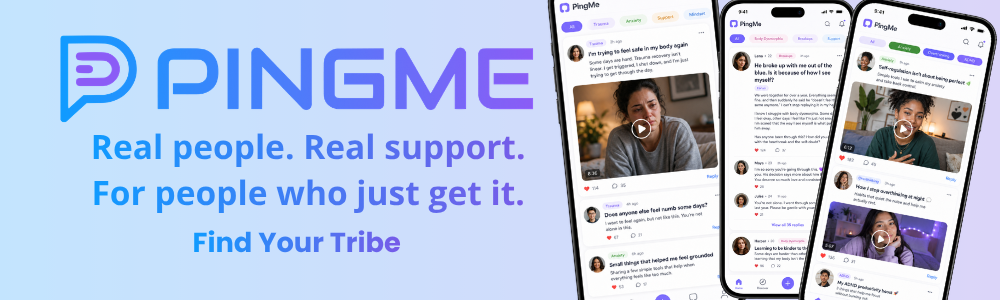
PingMe is a social wellness platform being built to help people find others who understand what they are carrying. Not people who simply “liked” the same motivational quote. Real people who have lived through similar experiences and can honestly say:
“Yep. I get it.”
Inside PingMe, people connect through topic-based communities called Pods.
Think ADHD, anxiety, overthinking, burnout, loneliness, executive-function chaos, relationship stress, chronic pain, parenting pressure, academic stress, and all the other things your brain likes to open in 37 separate tabs.
Each Pod is centered around a shared issue or life experience. Instead of shouting into the giant internet void, you can find conversations that actually feel relevant to you.
Because sometimes you do not need another article telling you to drink water, take a walk, and buy a new planner.
Sometimes you need people.
What happens inside a PingMe Pod?
Pods are being designed for:
- Honest conversations
- Shared experiences
- Forum-style discussions
- Video and community interaction
- Finding people who genuinely understand the topic
You might share something. Ask a question. Watch a video. Join a conversation. Or quietly look around until your social battery approves further activity.
No pressure to have the perfect words.
No need to create a polished highlight reel.
No requirement to explain your entire backstory before someone understands the vibe.
So…is PingMe therapy?
Nope.
PingMe is not therapy, telehealth, a clinical treatment platform, or a crisis service. It does not diagnose, treat, or replace professional care.
PingMe is about social wellness: the everyday connection, community, and belonging that can be difficult to find on traditional social platforms.
It is the space between scrolling alone and discovering a group of people who make you think:
“Oh. You too?”
Why is PingMe different?
Most social platforms organize people around popularity, entertainment, broad interests, or whatever the algorithm has decided you must obsess over today.
PingMe is being built around something more personal: what you are actually going through.
The goal is not social performance.
It is social connection.
Real people. Real conversation. Real support.
One Ping at a time.
Ready to find your Pod?
Join the PingMe early-access list, explore the communities being built, and become a Founding Pinger.
PingMe is currently being developed as an issue-based social wellness platform. Product features, Pod availability, and launch timing should be confirmed before publication.